2026

TECHNOLOGY AND TRAINING ARE REDEFINING SUSTAINABILITY IN SHOTCRETE

Cement Production Accounts For Approximately 8% Of Global Co₂ Emissions, A Striking Figure That Highlights The Urgent Need For Improvement. As The World Moves Toward More Sustainable Solutions, Significant Potential Lies In Improving Within The Construction Sector
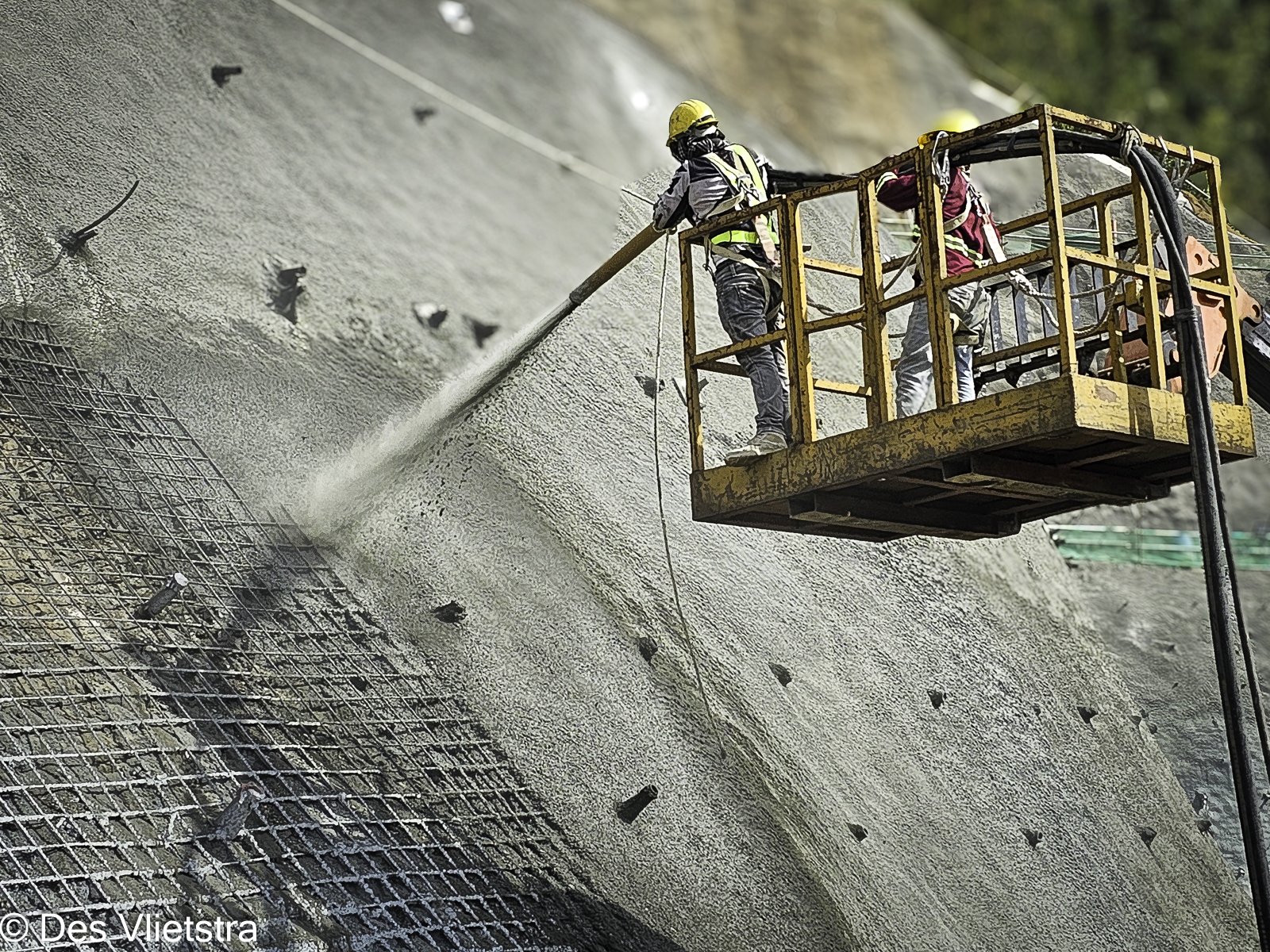

SHOTCRETE

According to Custom Market Insights (CMI), the global shotcrete market is experiencing rapid growth. Valued at USD 8.93 billion in 2024, it is expected to more than double by 2034, reaching USD 20.73 billion. With a compound annual growth rate (CAGR) of 8.79%, this expansion represents both opportunity and responsibility, particularly regarding environmental impact.

In shotcrete applications, sustainability depends on three key factors: the equipment, the quality of the mix and the skill of the operator. A perfect mix can still result in waste if the operator lacks training or poor equipment. Conversely, even the most skilled operator with advanced equipment can’t overcome the limitations of a poor mix design. Common issues ultimately contribute to unavoidable emissions.

Simplification of the issue:


TRAINING

Training is essential for ensuring quality, safety, and sustainability in shotcrete applications. Skilled operators can significantly reduce material waste and minimize environmental impact. To support this, advanced tools such as shotcrete simulators are available, offering realistic, hands-on training that helps operators refine their skills without the risks and costs associated with on-site practice.In 2024, Edvirt AB trained more than 100 operators across five continents using the Edvirt VR Shotcrete Simulator™. The impact was remarkable: operators became more safety-aware, application quality improved, and rebound rates decreased from 15.64% to 9.62%, a 38.47% improvement that directly translates into both environmental and economic benefits.

“All aspects of shotcrete execution are influenced by the operator’s skill — from safety and quality to economics and environmental impact; that’s why training is key”

One of the simulator’s greatest strengths is its ability to provide real-time, personalized feedback. This feature closes the gap by enabling operators to identify areas for improvement and enhance their technique. If all operators trained in 2024 applied 10 m³ of shotcrete daily for a year, more than 27,000 m³ of material would be saved from waste. This equates to nearly 10,000 tons of CO₂ emissions avoided.

“Even experienced operators may think they are performing well, but in reality, there is always room for improvement.”
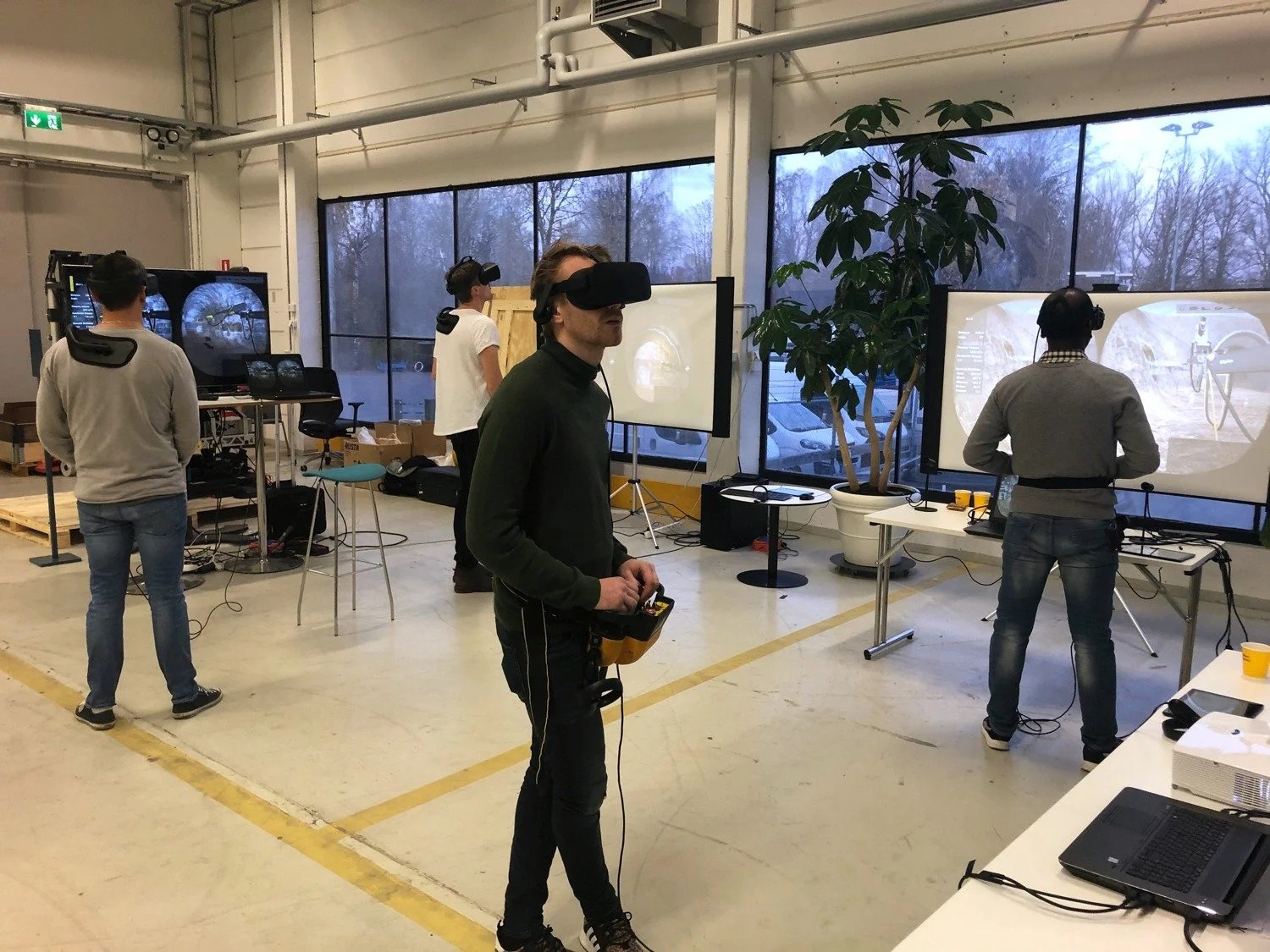
By improving operator skills, it boosts quality, lowers costs, and promotes sustainability. As the construction industry continues to advance, innovations like this offer a vision of a future where technology and environmental responsibility go hand in hand.


Written by: Fredrik Pramberg

References:

Cement

Global Shotcrete Market Size, Share 2025 - 2034

Precision in the Pour: How Opitz & Matuschak (OM) is Redefining Shotcrete Standards

As the underground construction industry evolves, the demand for precision, worker safety, and material efficiency has never been higher. OM Opitz+Matuschak GmbH (OM), a specialized equipment manufacturer based in Dorsten, Germany, is meeting these challenges head-on by bridging the gap between high-level engineering and site-level usability.

Deepening the Commitment to Excellence

After a successful year as an affiliate member, OM is proud to announce its transition to full corporate membership within EFNARC. This step reflects our growing dedication to the global shotcrete community and our desire to play a more active role in shaping the technical and professional standards of underground construction. Over the past year, we have seen firsthand the value of EFNARC’s mission, and as a corporate member, we are eager to contribute our specialized expertise in nozzle technology to the broader industry dialogue.

Engineering Durability: The Ceramic Advantage

Founded by industry practitioners who understand the daily realities of the job site, OM has built its reputation on a core innovation: the OM ceramic spray nozzle.

This ensures a consistent material flow and mix over extended use, resulting in superior surface finishes and optimized air distribution. The impact of this technology is best seen in its portfolio of high-stakes infrastructure projects, including the Brenner Base Tunnel, Stuttgart 21, and the Elleringhausen Tunnel extension.


Aligning with EFNARC: Raising the Bar for Safety and Quality

OM’s mission naturally converges with EFNARC’s commitment to "continually raise the technical and professional standards of the industry." This alignment is most evident in three key areas:

  • Worker Health: Our low-dust nozzle technology directly supports on-site health and safety, adhering to EFNARC guidelines for cleaner spraying environments.

  • Structural Integrity: Optimized compaction and consistent flow improve the mechanical performance of sprayed concrete—a critical metric for EFNARC compliance.

Professional Education: Beyond equipment, OM prioritizes practical training, ensuring that operators understand the nuances of nozzle handling and maintenance to foster a more skilled global workforce.

Proven Performance: The Elleringhausen Case Study

The effectiveness of our collaborative approach was recently highlighted during the Elleringhausen Tunnel extension. Working alongside leading firms like Züblin and Hochtief, OM implemented ceramic nozzle technology that fundamentally changed the working environment.

The unique internal mixing dynamics of the system led to a measurable reduction in airborne dust. For the spray operators, this meant drastically improved visibility and reduced hazardous exposure in a confined underground space. Furthermore, contractors reported a significant reduction in rebound and more uniform material distribution—proving that high safety standards and cost-effective execution go hand-in-hand.

Future Outlook: Modernizing Dry-Spray Operations

Looking ahead, OM is set to challenge the industry's perception of dry-spray operations. Historically criticized for high dust exposure, dry-spray remains a vital technique that we believe can be modernized through innovation.

We are currently preparing to launch a new dry-spray shotcrete machine designed to function without a pressurized silo system. By eliminating pressure-related dust emissions at both the intake and the nozzle, this innovation aims to remove the "outdated stigma" associated with dry-mix shotcrete. Through field-driven feedback and technical partnerships, OM Opitz+Matuschak GmbH continues to drive the industry toward a cleaner, more controlled, and technically viable future.


Contact Information

For technical, commercial, or strategic inquiries regarding shotcrete systems and project collaborations, please contact:

Gordon Opitz Managing Director Opitz & Matuschak (OM), Swebenring 15, 46286 Dorsten, Germany

Email: info@oundm.com

Phone: +49 (0) 2360 / 785

LOG IN / SIGN UP